

The best craft activities for dementia patients are familiar, flexible, and easy to adjust. Projects such as painting, flower arranging, collages, and clay shaping can offer a pleasant way to participate and connect without pressure to remember instructions or produce a perfect result.
The right activity depends on the person’s interests, current abilities, energy, and comfort. You will find simple craft ideas, nature-based projects, ways to adjust each activity, and signs that it may be time to simplify or pause.
What Makes a Craft Dementia-Friendly?
A dementia-friendly craft is a familiar, flexible activity that uses manageable steps and easy-to-handle materials. It gives the person a way to participate without requiring them to remember several instructions or create a specific final result.
A suitable craft usually reflects the person’s interests, current abilities, energy, and need for support. The Alzheimer’s Association guidance on choosing activities recommends selecting activities the person has enjoyed before and adapting them to their current abilities. A person’s comfort can also change from day to day, so the same project may need fewer steps or more help at another time.
The goal is not to test artistic skill or memory. A successful activity may involve choosing a color, arranging materials, painting one section, or simply enjoying time beside someone they trust.
Creative Craft Activities for Dementia Patients
The most useful craft ideas give you room to adjust the materials, number of steps, and amount of support. Start with a familiar theme when possible and prepare anything complicated before inviting the person to join.
Painting and Color Activities
Watercolors, sponge painting, painted stones, large-scale coloring, and decorated flowerpots can work well because the person can participate without following a strict pattern. You can make the project easier by offering two colors, securing the paper or object to the table, and completing detailed preparation ahead of time.
Collage and Memory-Based Projects
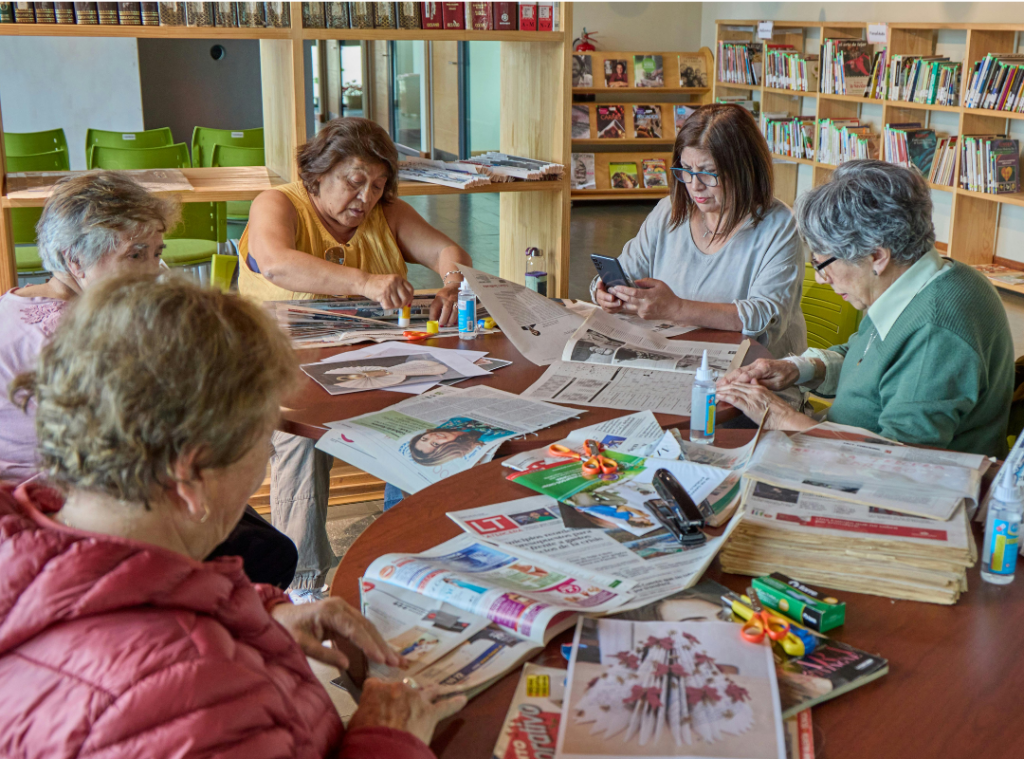
A photo collage, simple scrapbook page, greeting card, or seasonal picture board can connect the activity with familiar people, places, or traditions. Family photos may encourage conversation, but avoid asking the person to name everyone or remember exact events. The project can still be meaningful even when the memories are incomplete.
Tactile and Hands-On Crafts
Soft clay shaping, tissue paper art, yarn wrapping, fabric collages, sticker art, and large-bead stringing rely more on touch and movement than detailed instructions. These simple arts and crafts for Alzheimer patients may be easier when drawing, writing, or completing several steps becomes frustrating.
Keep safety in mind when choosing supplies. The Alzheimer’s Association guidance on art and music activities advises using safe materials and avoiding toxic substances or sharp tools during creative activities. It also explains that art can support self-expression and engagement even as dementia progresses.

Nature Craft Activities for Dementia Patients
Nature craft activities for dementia patients can include leaf rubbings, pressed flower art, painted stones, flower arranging, nature collages, and decorating planters. These projects can feel familiar to someone who has enjoyed gardening, flowers, outdoor walks, or seasonal decorating.
Choose larger leaves, flowers, and stones that are easier to hold. Gather supplies beforehand if collecting them would be tiring, and prepare any difficult steps in advance. The person may enjoy arranging flowers, sorting leaves, or feeling different textures without completing a formal craft.
Some approachable options include:
- Creating leaf rubbings with large leaves
- Arranging flowers in a simple container
- Painting smooth stones with broad brushes
- Placing pressed flowers onto prepared paper
- Building a collage from leaves and flower pictures
There is no need to finish every step. Sorting, touching, choosing, and arranging can be the full activity when that feels more comfortable.
How to Match a Craft to the Person’s Current Abilities
A useful craft should match four things: interest, ability, energy, and support. This framework helps you look beyond a person’s age or diagnosis and focus on what feels manageable in that moment.
First, ask whether the activity connects with something the person has enjoyed. Then consider whether they can comfortably complete part of it, how much energy they have, and what support you can provide without taking over.
| What You Notice | Better Craft Characteristics | Examples | Helpful Adjustment |
| Enjoys familiar routines but forgets steps | A familiar project presented one step at a time | Card decorating or flower arranging | Show one material or direction at a time |
| Has reduced hand strength or dexterity | Large, lightweight materials that are easier to grip | Sponge painting or tissue paper collage | Pre-cut materials and secure the work surface |
| Becomes distracted easily | Short project with an immediate result | Sticker art, painted stones, or leaf rubbings | Remove extra supplies and limit choices |
| Enjoys touch more than verbal instructions | Tactile, process-focused activity | Clay shaping, fabric collage, or yarn wrapping | Let touching and sorting count as participation |
| Tires or becomes frustrated quickly | Flexible activity that can stop at any point | Watercolors, collage, or flower arranging | End while the experience still feels positive |
| Enjoys spending time with others | Shared or side-by-side activity | Group mural, card making, or seasonal display | Focus the conversation on the present activity |
A person may be able to select materials or make one part of the project even when they cannot complete it independently. That participation still gives them a role and helps preserve choice. The Alzheimer’s Association’s explanation of Alzheimer’s stages notes that people in the middle stage may continue participating in daily activities with assistance, especially when tasks are simplified around what they can still do.
Making Arts and Crafts Calm, Respectful, and Enjoyable
How you introduce a craft can matter as much as the project itself. A quiet work area, prepared supplies, and one clear step can make it easier for the person to begin.
Show the first step instead of explaining the entire project. Offer two meaningful choices, such as blue or green paper, instead of placing many options on the table. Keep themes and materials suitable for adults so the activity feels respectful and connected to the person’s interests.
Look for signs that the project has become tiring or frustrating:
- Pulling away from the table or materials
- Repeatedly putting supplies down
- Showing tension, restlessness, or irritation
- Losing interest after a short period
- Having trouble following one simple step
You can simplify the task, offer a break, or stop without treating the moment as a failure. Enjoyment and connection matter more than completing the craft.
What Families Commonly Overlook About Creative Activities
A finished project is not the only sign that an activity went well. The meaningful part may be choosing colors, feeling the materials, sitting together, or participating for a few minutes.
More choices do not always create more independence. Too many supplies can make it difficult to know where to begin. Two clear options may give the person more control because the decision feels manageable.
Families should also avoid turning memory-based crafts into a quiz. A photo collage can create a familiar and comforting activity without requiring the person to identify everyone or explain when a picture was taken.
Familiarity may matter more than novelty. Someone who once enjoyed gardening may respond well to flower arranging, while a person who likes sewing may enjoy sorting fabric or creating a simple textile collage. As abilities change, the same craft can be reduced from several steps to one comfortable action.

When Consistent Activities at Home Become Hard to Manage
Families can have plenty of creative ideas and still find it difficult to prepare activities regularly. You may also be balancing meals, personal needs, household responsibilities, changing routines, and your own need for rest.
Caregiving demands can become significant over time. According to the Alzheimer’s Association 2026 Facts and Figures report, unpaid caregivers provided more than 19 billion hours of care during 2025. Difficulty maintaining daily engagement does not mean you are doing something wrong.
A predictable routine and broader support may become helpful when your loved one needs regular guidance, personal assistance, and social opportunities. Learning more about structured memory care support can help your family consider how daily engagement may fit within a wider care plan. You can also use Valley Spring’s care assessment to organize the care questions your family may need to discuss next.
For additional ideas that support daily engagement, explore these ways to improve memory for seniors.
See How Valley Spring Encourages Creativity and Connection
At Valley Spring Memory Care, creative projects are part of a wider approach to activities and engagement. Residents can take part in games, music, exercise, trivia, and creative projects designed to foster social connection and cognitive engagement. Personal support for daily needs and memory care-focused wellness support are also available.
Families are welcome to visit Valley Spring at 555 Miller Lane in Los Banos to ask how activities are adjusted around resident needs and interests. Schedule a visit, contact the community, or call 209-710-4783 to begin a conversation about the daily experience you want for your loved one.
Frequently Asked Questions
What are creative activities for dementia patients?
Creative activities for dementia patients include painting, flower arranging, collages, clay shaping, music, card decorating, and simple textile projects. The best choice reflects the person’s past interests and current abilities. Projects should use manageable steps and materials that are comfortable to handle. Participation and enjoyment matter more than completing a perfect final product.
What is the 90-second rule for dementia patients?
The 90-second rule is an informal caregiving idea, not a standardized medical rule. It generally refers to allowing a person time to process a short request or instruction before speaking again. Processing time varies, so watch for the person’s response instead of counting exactly 90 seconds. Speak calmly, present one idea at a time, and simplify the request if the person appears confused or uncomfortable.
What is middle-stage Alzheimer’s like?
Middle-stage Alzheimer’s often involves more noticeable difficulty with daily tasks, communication, memory, and behavior. A person may still participate in familiar activities but needs assistance or simpler steps. Craft projects may work best when they are familiar, brief, and easy to adjust. Each person experiences Alzheimer’s differently, so activities should reflect their current comfort and abilities.
What are nature craft activities for dementia patients?
Nature craft activities can include leaf rubbings, flower arranging, painted stones, pressed flower art, nature collages, and decorated planters. Use larger materials that are easy to see and hold. Prepare complicated steps before the activity begins and offer only a few supplies at a time. Touching, sorting, and arranging natural materials can be meaningful even when no finished project is created.