


Reminiscence activities for the elderly use familiar photographs, music, objects, traditions, and conversations to bring meaningful parts of a person’s life into the present. The goal is not to test memory or recover every detail. It is to encourage comfort, expression, participation, and connection in a way that respects the person’s abilities.
For families supporting someone with memory loss, even a short exchange about a favorite song or familiar photograph can feel meaningful. You will learn how to choose supportive activities, introduce them without pressure, recognize when they are working, and adjust them to the person’s comfort and interests.
What Are Reminiscence Activities?
Reminiscence activities are conversations or experiences that use familiar prompts to help an older adult reflect on meaningful people, places, routines, interests, and life events. A prompt might be a photograph, song, household object, recipe, piece of clothing, or familiar story.
Reminiscing does not require someone to recall an event completely or describe it accurately. A person may respond by smiling at a photograph, singing part of a song, touching a familiar object, or expressing a feeling that the prompt brings forward. The Alzheimer’s Association explains that reminiscence can help people living with Alzheimer’s disease or another dementia feel connected, even when recent events are harder to remember.
The Alzheimer’s Association estimates that 7.4 million Americans age 65 and older are living with Alzheimer’s in 2026, and that number may reach 13.8 million by 2060. As more families support loved ones experiencing memory changes, flexible and person-centered ways to encourage connection can become an important part of spending time together.
How to Make Reminiscing Supportive Instead of Stressful
The way you begin a reminiscence activity often matters as much as the activity itself. A gentle invitation gives the person room to respond in their own way. Questions that demand an exact name, date, or fact may feel like a test, especially when the person knows they are struggling to remember.
Begin With an Invitation, Not a Memory Test
Try prompts such as, “What do you notice in this picture?” or “Does this song sound familiar?” These questions leave space for an observation, feeling, or story. Asking, “Who is this?” or “Don’t you remember?” can create pressure when the answer does not come easily.
Follow the Person’s Response
Pay attention to what seems to hold the person’s interest. They may focus on a small detail you did not expect, such as a dress in a photograph or an instrument in a song. Following that response can lead to a more natural exchange than staying with a prepared list of questions.
Accept Feelings Even When Details Are Unclear
A memory may be incomplete, mixed with another event, or difficult to explain. You do not need to correct every detail. You can respond to the feeling behind what the person shares by saying, “That sounds like it was a happy time,” or “You seem to remember that place warmly.”
A simple connection-over-correction approach can help:
- Offer one familiar prompt.
- Notice the person’s response.
- Follow what interests them.
- Avoid correcting minor details.
- End while the experience still feels comfortable.
A brief smile, a familiar rhythm, or a few comfortable words may be enough for that moment.

Reminiscence Activities for the Elderly to Try Together
The most useful reminiscing activities for seniors are personal, manageable, and easy to adjust. You do not need an elaborate project. One meaningful object or familiar song may be enough to begin.
Look Through Familiar Photographs
Choose a small number of photographs showing family members, pets, former homes, celebrations, workplaces, or familiar places. Let the person decide where to focus. You might ask what they notice, how the people seem to be feeling, or what the setting brings to mind.
Listen to Music From Meaningful Times
Play songs, performers, hymns, or dance music connected with the person’s younger years, family traditions, or favorite pastimes. Singing, tapping to the rhythm, or quietly listening can all be forms of participation. The Alzheimer’s Association notes that music can support engagement and self-expression, including after dementia has progressed.
Create a Memory Box
Fill a box with a few safe objects connected with the person’s interests, career, family life, travel, celebrations, or hobbies. A ticket stub, sewing item, postcard, tool, ornament, or piece of fabric may prompt recognition or conversation. Introduce one item at a time so the experience does not become overwhelming.
Revisit Recipes and Food Traditions
Recipe cards, kitchen utensils, holiday menus, and family food traditions can lead to conversations about everyday life. You might ask what meals were common at home, who usually cooked, or what foods appeared at celebrations. The discussion can stay focused on familiar routines without requiring exact dates or names.
Explore Clothing, Accessories, and Personal Style
Hats, jewelry, uniforms, formalwear, and fabrics can prompt memories about work, celebrations, shopping, or personal style. Old-fashioned photographs may also encourage someone to comment even when they do not want to tell a long story.
Talk About Hobbies and Familiar Routines
Former hobbies and routines often provide comfortable starting points. Gardening, crafts, games, music, household tasks, careers, clubs, and weekend habits can all offer familiar subjects. Focus on what the person enjoyed or knew well.
Use Seasonal and Holiday Traditions
Seasonal decorations, familiar songs, family gatherings, school breaks, and annual celebrations can create natural conversation. Some traditions may bring strong feelings, so watch the person’s response and change the subject if the discussion becomes uncomfortable.
Families looking for more ways to encourage participation can also explore these meaningful activities for people with dementia.
Choosing the Right Activity for the Person and the Moment
The best activity is not always the most creative or detailed one. It is the activity that fits the person’s history, energy, attention, communication style, and comfort at that moment. An idea that works well one afternoon may feel tiring on another day.
Use the person’s response as your guide:
| What You Notice | Activity Format to Consider | How to Adapt It |
| Enjoys looking at faces and familiar places | Photo albums or picture cards | Show only a few images and invite observations |
| Responds to rhythm or familiar voices | Music and singing | Choose familiar songs and keep the volume comfortable |
| Likes handling or sorting objects | A memory box or household items | Select safe objects connected with former routines |
| Becomes tired during long conversations | One photograph, song, or object | Keep the activity brief and stop before fatigue |
| Enjoys being around others | A small reminiscence group | Use one shared theme and allow different responses |
| Prefers quiet, one-to-one contact | Personal story prompts | Follow the person’s pace without completing a question list |
Personal history is only one part of the choice. Also consider how alert the person seems, whether the surroundings feel calm, how many choices they can comfortably manage, and whether they prefer talking or quieter participation.
A simple activity that creates a relaxed moment is more useful than a longer activity that feels like work. Familiarity, comfort, and flexibility usually matter more than completing a planned task.
Conversation Topics That Can Encourage Reminiscing
Good reminiscence topics are familiar enough to invite a response but broad enough to avoid testing specific facts. Ordinary memories can be especially helpful because they connect with routines the person repeated over many years.
Childhood and School Years
You might talk about a childhood home, siblings, school routines, favorite games, neighbors, teachers, or family traditions. Photographs and familiar objects can make these topics easier to approach.
Work, Skills, and Accomplishments
Ask about a first job, a skill the person learned, responsibilities they enjoyed, or advice they once gave others. Work-related memories may support a sense of identity, especially when the person took pride in what they did.
Family and Community Life
Family celebrations, friendships, parenting, community events, and places of personal importance can all encourage reminiscing. Keep the discussion open enough for the person to choose which relationship or experience they want to explore.
Music, Entertainment, and Pastimes
Songs, radio programs, television shows, sports, dancing, crafts, and clubs may bring back familiar feelings. Playing a song or showing an image may work better than asking someone to recall the title on their own.
Everyday Life and Personal Preferences
Conversations about meals, clothing, shopping, household routines, transportation, vacations, and pets can be just as meaningful as major life events. Everyday memories often feel easier to approach because they do not depend on remembering one exact occasion.

Individual and Reminiscence Group Activities
Reminiscence activities can happen one-to-one or in a small group. The better format depends on the person’s preferences, comfort level around others, communication abilities, and energy.
One-to-One Reminiscing
Individual activities make it easier to personalize the prompt and adjust the pace. A family member might share one photograph, play a favorite song, open a memory box, or look at a recipe card. You can pause quickly if the person becomes tired or move toward a subject that seems more interesting.
Small-Group Reminiscing
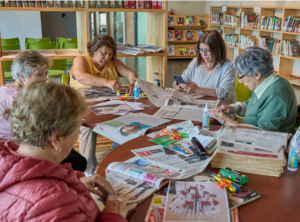
Reminiscence group activities can use a shared theme such as school days, seasonal traditions, household objects, music, games, or creative projects. Each person can participate differently. One person may tell a story, while another listens, sings, handles an object, or responds with a smile.
Including Someone Who Does Not Want to Speak
Verbal storytelling is not the only sign of meaningful participation. A person may prefer listening to others, looking at an object, humming, or simply staying with the group. The Alzheimer’s Association’s activity guidance recommends adapting activities to the person’s abilities and focusing on safety and enjoyment.
Signs an Activity Should Be Changed or Paused
A familiar subject will not feel comfortable every time. Changes in energy, mood, surroundings, or the topic itself may affect how the person responds. Continuing after the person becomes distressed can turn an intended moment of connection into a frustrating experience.
Consider changing or pausing the activity when the person:
- Turns away or repeatedly changes the subject
- Appears tense, restless, frustrated, or withdrawn
- Struggles with too many questions or choices
- Becomes tired or loses interest
- Reacts strongly to the topic
Pause the question and acknowledge the response without demanding an explanation. You can offer a simpler object, switch to music, sit quietly together, or try another activity later. A successful activity does not have to uncover a forgotten memory. Comfort, recognition, companionship, and quiet participation can all be meaningful outcomes.
When Families May Need More Consistent Memory-Focused Engagement
Family-led activities can create valuable moments, but providing suitable engagement every day may become difficult as memory loss affects routines, communication, participation, or personal support needs. You may find that your loved one needs frequent guidance, shorter activities, repeated reassurance, or more individual encouragement than the family can consistently provide.
This may be a time to explore how structured memory care services could support daily life. Consider whether your loved one needs regular help throughout the day, whether personal needs also require support, and whether familiar activities are becoming harder to manage at home.
Valley Spring’s Care Assessment can help you organize what you are noticing and consider possible next steps. It is not a diagnosis, but it may help you think more clearly about the type and consistency of support your family is seeking.
See How Meaningful Engagement Fits Into Daily Memory Care
Meaningful engagement works best when it reflects the person’s interests, abilities, comfort, and personal history. Valley Spring Memory Care in Los Banos offers activities and engagement that may include games, creative projects, music, exercise, and trivia designed to foster social connection and cognitive engagement. Its memory care also includes personal support for daily needs and memory care-focused wellness support.
You can explore Valley Spring’s memory care setting or schedule a visit to discuss your loved one’s routines, interests, and current needs. To speak with the team first, contact Valley Spring or call 209-710-4783. A conversation can help you understand how meaningful daily engagement may fit into the wider support your family is considering.
Frequently Asked Questions
What Should You Reminisce About With an Older Adult?
Reminisce about familiar subjects such as childhood, school, family traditions, work, music, hobbies, former homes, pets, celebrations, and everyday routines. Choose topics connected with the person’s own interests and experiences. Photographs, music, and familiar objects can help when direct questions feel difficult. Let the person guide the conversation and move to another topic if they appear uncomfortable.
What Is Shadowing in Dementia?
Shadowing is a behavior in which a person with dementia closely follows or stays near a familiar caregiver. The person may be seeking reassurance, familiarity, help, or a sense of safety. Responding calmly and offering a simple, familiar activity may help, although every situation is different. Speak with a qualified healthcare professional if the behavior is new, distressing, or difficult to manage.
What Stage of Dementia Involves Losing Track of Time?
Losing track of dates, time, sequence, or the passage of time can occur as dementia progresses, but one symptom cannot determine a specific stage. Dementia affects people differently, and abilities do not always change in the same order. New or worsening confusion may also have causes that need professional evaluation. A qualified healthcare professional can assess the person’s symptoms and broader support needs.
What Activities Encourage Reminiscing?
Photographs, familiar music, memory boxes, recipes, personal objects, seasonal traditions, hobbies, and small-group discussions can all encourage reminiscing. The activity should reflect the person’s history, preferences, and current comfort. Use open prompts and avoid testing exact names or dates. Listening, smiling, singing, or reacting to an object can be meaningful forms of participation even when the person does not tell a complete story.