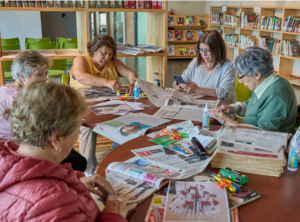


Games for seniors with dementia work best when they are familiar, flexible, easy to follow, and centered on shared enjoyment. Simple matching, sorting, music, puzzles, and movement games can encourage participation without placing pressure on the person to remember answers, follow complicated rules, keep score, or finish every step.
An estimated 7.4 million Americans age 65 and older are living with Alzheimer’s dementia, so many families are looking for comfortable ways to spend meaningful time together. The Alzheimer’s Association’s current Facts and Figures report provides more context about the number of people affected. At Valley Spring Memory Care in Los Banos, engagement may include games, creative projects, music, exercise, and trivia. The ideas below can help you choose activities that fit your loved one’s interests, abilities, energy, and comfort.
What Makes a Game Dementia-Friendly?
A dementia-friendly game uses simple directions, familiar materials, a comfortable pace, and flexible rules. It gives the person ways to participate and connect without placing pressure on memory, speed, accuracy, or winning.
A game may be a good fit when the person can understand its main action through a short explanation or demonstration. Familiar objects and clear visual cues can make participation easier. A quiet setting can also help because people living with Alzheimer’s may communicate more comfortably in spaces with fewer distractions. The Alzheimer’s Association offers communication guidance for families and caregivers.
The goal does not have to be testing or strengthening memory. A meaningful game may create conversation, movement, laughter, shared attention, or a familiar routine. The person’s comfort and interest tell you more about the game’s success than the final score.
Easy Games for Seniors With Dementia to Play Together
Easy games for seniors with dementia require little preparation and allow you to adjust the activity as you go. Start with one clear action, demonstrate it, and notice how the person responds before adding another step.
Picture Matching With Familiar Images
Place a small number of clear pictures or family photographs on a table and invite the person to find similar images, point to a favorite, or talk about what they notice. The pictures can support conversation even when no matches are made.
Simple Card Sorting
Use easy-to-see playing cards and sort them by color, suit, or number. You can work side by side, hand the person one card at a time, or reduce the deck if too many cards feel distracting.
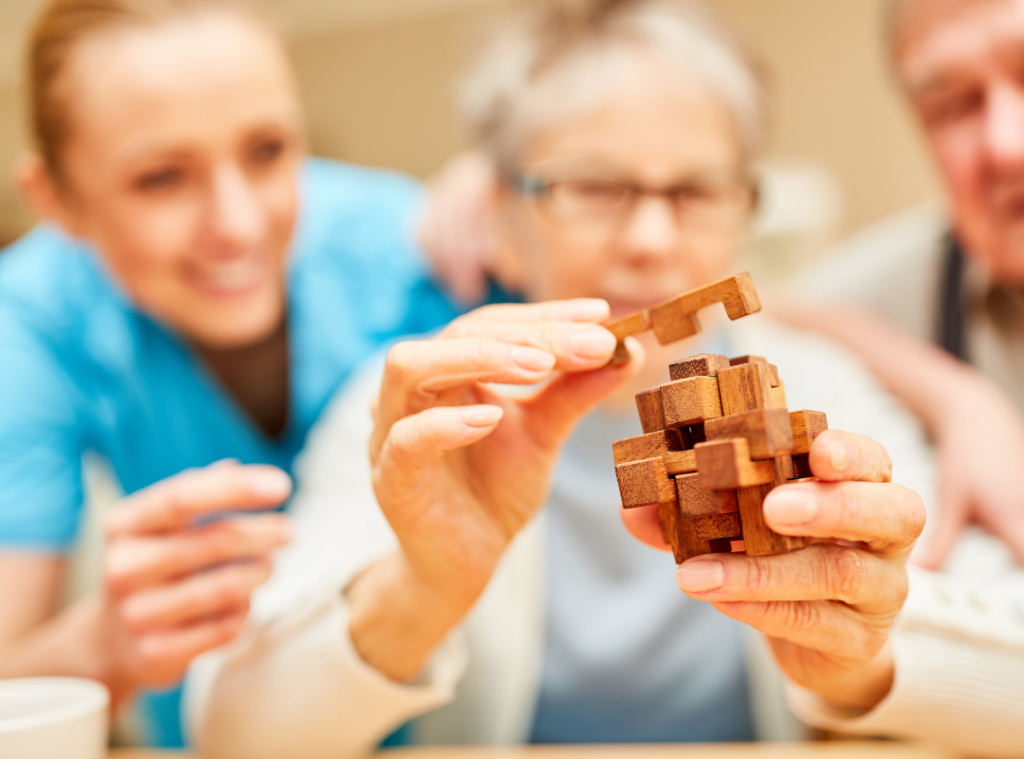
Large-Piece Puzzles
Choose a puzzle with large pieces and a clear picture. Work on one small area together, offer two possible pieces, or invite the person to hand pieces to you without making completion the only goal.
Roll or Toss Games
Roll or gently toss a soft ball between two people. The game can be played while seated and may encourage eye contact, movement, anticipation, and simple turn-taking.
Finish-the-Phrase Games
Begin a familiar saying or phrase and give the person time to respond. You can complete it together, offer a clue, or move into conversation if the exact ending does not come easily.
Name That Tune or Sing-Along Games
Play part of a familiar song and invite the person to listen, hum, tap, or sing. National Institute on Aging-supported research is exploring how music affects the brain and body as people age, although more research is needed before firm conclusions can be made. You can read more about this work through the National Institute on Aging.

Fun Memory Care Games for Social Connection
Fun games for seniors with dementia can include family members, caregivers, or a small group. Picture bingo, simplified trivia, sing-alongs, pass-the-object games, imitation movements, and collaborative storytelling all offer more than one way to join in.
Participation will not look the same for everyone. One person may answer a trivia question, while another points to a picture, repeats a word, taps to music, watches the group, or smiles during a familiar song. These responses can still show interest and connection.
Games often feel more welcoming when everyone works toward a shared experience. A group can complete a picture puzzle together, take turns choosing songs, or create a simple story from illustrated cards. Removing pressure to perform helps people participate at a level that feels comfortable.
Choosing the Right Game for the Person and the Moment
The right game depends on four factors: interest, ability, energy, and setting. A game that works well one afternoon may not feel right the next morning, so focus on the person’s response in the moment.
Consider these questions before you begin:
- Interest: Does the activity connect with something the person enjoys?
- Ability: Can you demonstrate the main action without a long explanation?
- Energy: Would a lively game or a calm seated activity feel better?
- Setting: Is the room comfortable and free from excess noise or clutter?
Time of day can also shape the experience. A person who is tired, hungry, uncomfortable, or distracted may not want to play, even when the activity is familiar. Alzheimer’s disease can affect sleeping habits, including sleeping too much or too little, waking often at night, and napping frequently during the day. The National Institute on Aging provides guidance on managing sleep problems in Alzheimer’s disease.
Do not judge a game only by whether it worked before. Notice what the person seems ready for now, then simplify, change, or pause the activity as needed.
Game Comparison Table for Families and Caregivers
The best game is one that matches the person’s abilities while offering an enjoyable way to be present with someone else.
| Game Type | Preparation Needed | Ways to Participate | Connection Opportunity | Simple Adaptation |
| Picture matching | Familiar pictures or cards | Match, point, sort, or discuss | Encourages observation and conversation | Use fewer picture pairs |
| Card sorting | Large, easy-to-see cards | Sort by color, number, or suit | Supports shared attention and turn-taking | Remove traditional card-game rules |
| Large-piece puzzle | Puzzle with a clear image | Find, place, or hand over pieces | Creates a shared task | Complete one section at a time |
| Music game | Familiar songs | Listen, hum, sing, or tap | Encourages shared enjoyment | Play short song clips |
| Soft-ball game | Lightweight ball | Roll, pass, or gently toss | Encourages movement and eye contact | Play while seated |
| Picture bingo | Large visual bingo cards | Point, cover, or identify | Supports small-group participation | Use fewer spaces |
Use the table as a starting point, not a fixed plan. You may begin with matching and discover that the person would rather talk about the pictures. That conversation can be just as meaningful as completing the original game.
How to Adapt Familiar Games Without Taking Away the Fun
A familiar game can remain enjoyable even when you simplify the rules. Keep the parts the person recognizes, then remove anything that creates unnecessary pressure or confusion.
Helpful adjustments include:
- Reduce the number of pieces, cards, or choices.
- Demonstrate the next action instead of giving long directions.
- Remove timers, scorekeeping, and strict turn rules.
- Play cooperatively so everyone works together.
- Allow the person to stop or change how they participate.
The most useful principle is simple: Change the game before asking the person to work harder to follow it.
This may mean turning a card game into a sorting activity or changing trivia into a conversation with two possible answers. Support should help the person stay involved. Repeated correction can shift attention away from enjoyment and make the interaction feel like a test.
What to Do When a Game Is Not Working
If a game causes frustration, confusion, or disinterest, pause or change it. Stopping does not mean the activity failed. It may simply be too complex, tiring, noisy, or unfamiliar at that moment.
You might reduce the activity to one action, move to a quieter space, offer two choices, or change from answering questions to pointing or sorting. Music, a familiar photograph, or a relaxed conversation may feel better than continuing the original game.
Caregivers sometimes spend time planning an activity and feel disappointed when it ends quickly. Try measuring success by the person’s experience, not by how closely the game followed your plan. A few comfortable minutes together may be more valuable than finishing every round.
Build an Activity Calendar for Seniors With Dementia
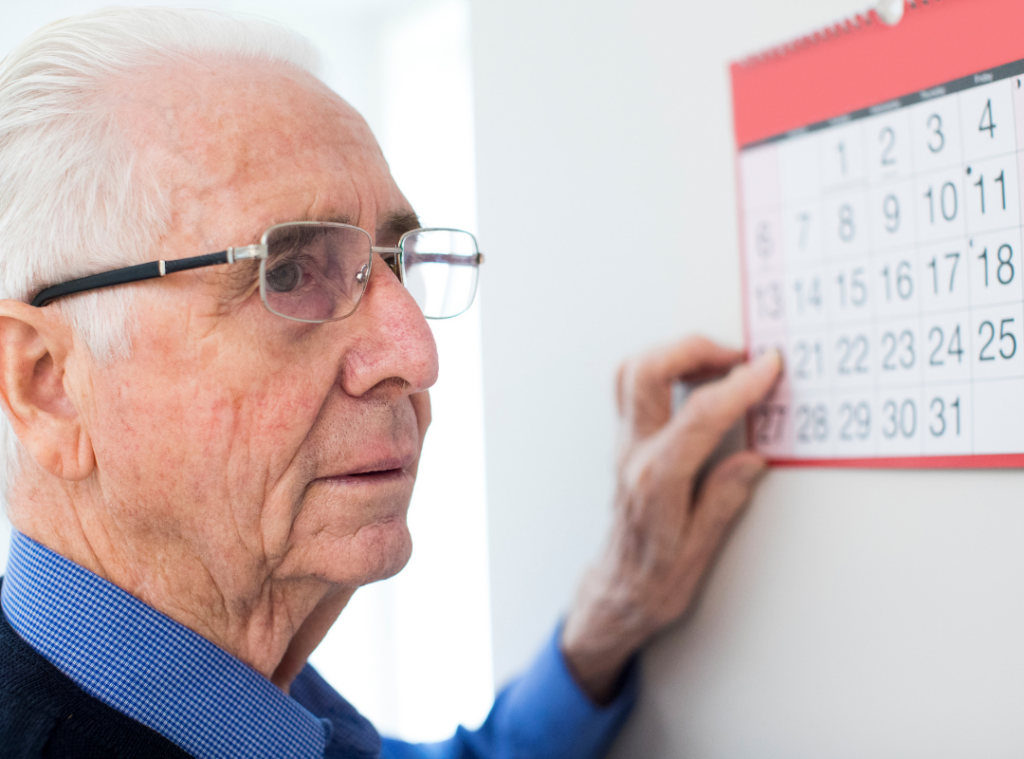
An activity calendar for seniors with dementia can create gentle variety without filling every part of the day. The calendar should remain flexible because interest and energy may change from one day to another.
Include a balanced mix of activities such as:
- Conversation and social games
- Music or creative projects
- Gentle movement
- Sorting and matching
- Quiet activities with familiar materials
A simple weekly plan might include one calm game, one social activity, one movement-based option, one familiar favorite, and one backup activity. The backup matters because it gives you an easy alternative when the first plan does not suit the person’s mood or energy.
Families who are also thinking about changing daily support needs can use the care assessment to consider whether a more consistent structure or personal assistance may be helpful.
Connection Matters More Than Getting the Game Right
Games can create shared attention, conversation, movement, familiar routines, and opportunities to take part with others. Their value does not depend on perfect recall, accurate answers, or completing every task.
Rules can change. A game can end early. Repetition is acceptable. Watching, smiling, pointing, humming, or sitting with the group may all be meaningful forms of participation.
The interaction often matters more than the activity itself. When you follow the person’s pace and response, the game becomes a way to spend time together instead of another task they are expected to complete.
For more ideas about social connection, physical activity, sleep, and brain-stimulating routines, explore 10 Ways to Improve Memory for Seniors.
Discover Meaningful Daily Engagement at Valley Spring Memory Care
Valley Spring Memory Care in Los Banos offers memory care services with activities and engagement that may include games, creative projects, music, exercise, and trivia designed to foster social connection and cognitive engagement. These opportunities are part of a broader daily experience that includes personal support for daily needs, memory care-focused wellness support, and three chef-prepared meals each day. You can explore the memory care amenities to learn more about the setting and support available.
Choosing the right activities often begins with understanding the person behind the diagnosis, including what they enjoy, how they prefer to participate, and what support helps them feel comfortable. Schedule a visit to see how engagement fits into daily life, contact the Valley Spring team with your questions, or call 209-710-4783 to discuss your loved one’s needs.
Frequently Asked Questions
What Are Three Things to Never Do With Your Loved One With Dementia?
Do not argue about every mistaken detail, pressure the person to remember, or continue an activity that is clearly causing distress. Correcting repeatedly may make an interaction feel like a test and increase frustration. Respond to the person’s feelings, offer a simple choice, or redirect the conversation gently. Every person and situation is different, so seek professional guidance when behaviors or communication changes cause concern.
What Is the 20 Questions Game for Seniors?
The traditional 20 Questions game involves guessing a person, place, or object by asking up to 20 questions. For a senior with dementia, use a familiar topic, allow clues, show pictures, or offer two possible answers. You do not need to count every question or require the person to find the final answer. The purpose is to encourage comfortable conversation and shared enjoyment.
What Activities Are Good for the Elderly With Dementia?
Good activities for an older adult with dementia are familiar, manageable, and matched to the person’s interests and current abilities. Options may include simple games, familiar music, creative projects, gentle exercise, sorting, matching, and adapted trivia. Consider the person’s energy, comfort, and surroundings before starting. An activity is useful when it supports participation without creating unnecessary pressure.
Should You Let a Dementia Patient Sleep All Day?
Persistent or significant daytime sleeping should be discussed with an appropriate healthcare professional. Sleep changes may be connected to several individual factors, including health conditions, medication, nighttime sleep, and daily routines. Calm daytime activities may help create structure, but games should not be treated as a solution for excessive sleeping. Keep track of noticeable changes so you can share clear information with the person’s healthcare professional.